

MindWing Concepts Blog


Tech Tuesday/Summer Study Series: Narrative and Autism Spectrum Disorder
 I am frequently asked to conduct evaluations encompassing social cognition and pragmatic language and always find it extremely valuable to include a detailed assessment of narrative language. However, in doing so, and having reviewed previous assessments of these students, I often find that I am like a newcomer to a desert landmark, standing there saying “Hey, look at this…?” Why haven’t the examiners before me documented and then suggested interventions around these inevitably present narrative language issues?...


Character Development, Six-Second-Stories™ and Jojo Siwa
 This past week my 5-year-old daughter Casey went to camp. On the first day, I suggested that she wear a T-shirt that depicts something she likes (LOL: Dolls, Unicorns, JoJo Siwa, Mermaids, Teenage Mutant Ninja Turtles, etc.) so that when she is meeting new friends, they can immediately know something she likes and ask her about it. She chose a T-shirt with a picture of “JoJo Siwa,” who is a young, popular performer. By wearing that, new friends will know a little about her as a “character” in a social setting. Upon arriving at camp, within 30 seconds, a Dad and daughter walked in and the Dad said, “You like Jojo Siwa? Avery and her mom saw Jojo Siwa in a concert this summer!”...


A POPCORN Lesson: “CORNY” Humor, Facts and Perspective Taking with SGM® and ThemeMaker®
 I saw this meme on Facebook recently and cracked up laughing at the “corny” humor! It just so happened that it was a 95-degree day here and I felt just like that popped stalk of popcorn—SO HOT! I am sure many of you can relate to the weather this summer. I actually Googled to see if that could actually happen—that popcorn would “pop” while still on the “ear.” First, I found a website Popcorn.org and realized there is WAY more to popcorn than I ever realized! Then, while using the Description Map from the ThemeMaker® Manual, I learned so much about popcorn. Popcorn is actually a member of the grass family—a specific kind of maize (corn)...


Braidy® Activities Using Farm and Farm Animal Books - Summertime favorites!
 Today I visited the Sixteen Acres Library in Springfield, MA. As I was browsing in the children’s section, I turned to find three youngsters reading a big book, “Big Red Barn,” written by Margaret Wise Brown. We have a farm-related blog on our website using this book that you can find here. The blog includes a wonderful downloadable activity you may be interested in sharing with your students about the farm. On a table of featured books, I then found “The Cow Who Climbed A Tree” by Gemma Merino. To continue with the farm theme, I checked out this book and thought you may enjoy sharing it with your students...


Tech Tuesday/Summer Study Series: Because and So Science
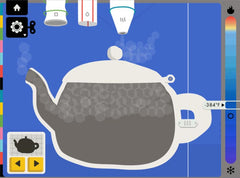 For July’s entry in the “Summer Study Series,” we’ll be looking at some cool connections to the science curriculum in addressing the macrostructure and microstructure of language. Our posts this summer are summarizing recent research related to narrative and expository language and Story Grammar Marker®/ThemeMaker® to give you some scientific thought for summer. To set the tone, there are some natural connections between the SGM® and ThemeMaker® methodologies and using science content with students. Narrative and expository elements give a framework for summarizing story and information, elaborating, focusing on main ideas and reducing the load on working memory by providing a scaffolded structure. The scientific method itself, moving from observation (Character/Setting), planning and hypothesizing, following experimental steps, and developing a conclusion, can be reframed using the Story Grammar Marker® as is demonstrated in the original SGM® manual...


“Yesterday”: Using Music for Critical Thinking, Perspective Taking and Inference

For Summer School, Tutoring, or Back to School – using music and songs is always a great way to engage students. It can be used to teach narrative structure, critical thinking, perspective-taking, problem-solving, conflict resolution and for improving inference skills and working on social-emotional growth! I wanted to share an example of this using the song “Yesterday” by The Beatles.
With renewed interest, I read an article about the song “Yesterday” that was written by Paul McCartney and John Lennon. The article analyzes the song in many ways, but quotes Paul McCartney as saying that this song “doesn’t resolve into any sense,” and that “you don’t know what happened. She left and he wishes it were yesterday—that much you get—but it doesn’t really resolve.” The song is made up of thoughts and emotions about a breakup. Perfect for analysis with the Critical Thinking Triangle® of the Story Grammar Marker®!...