

MindWing Concepts Blog


February is Black History Month — Lesson 1
 The month of February is Black History Month, also known as African-American History Month. It is celebrated yearly in February in the United States and Canada and coincides with the birthdays of Abraham Lincoln on February 12 and Fredrick Douglass on February 14. MindWing Concepts would like to contribute to this celebration by posting several lessons to use with the Story Grammar Marker® and ThemeMaker® which focus on the contributions and accomplishments of black Americans. These postings will include a little known, but related, story of a Springfield Massachusetts Baseball Team which chose friendship over victory eighty years ago in the American Legion Playoffs...


Understanding Novels / Chapter Books with SGM — Part 3
 Session #3: Description of a Tsunami
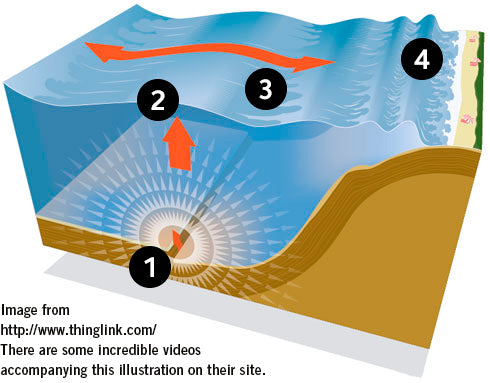
What is a Tsunami? A Tsunami is a huge wave that is caused by an earthquake or volcano eruption beneath the ocean/sea. There is a sequence of steps making up a Tsunami.
First, the sea bottom (Tectonic Plates) erupts. Next, the tectonic plates split or overlap, and pushing upward, cause the water above the split or overlap to rise in volume. Then, the water comes together to rise above the surface. At first the wave is not noticeable. Finally, the wave grows in height as it approaches the shallower waters of the shore...


Understanding Novels / Chapter Books with SGM — Part 2
 Session #2 — Comparative Analysis of a Geographical Setting
 Session #2 — Comparative Analysis of a Geographical Setting
This post is a continuation of our analysis of Setting of the short novel The Big Wave by Pearl S. Buck. In Session #1, we learned about Japan the country. We will now compare the Settings of the two main Characters. There are two primary geographical settings in this book. Both are in Japan.
- Kino lives on a mountain farm near a volcano.
- Jiya lives in a fishing village at the edge of the sea.


When the characters are a whole classroom of students: Some high and low-tech tips!
 For this first Technology Tuesday of 2016, we’ll be sharing some strategies for delivering whole-class instruction, some involving electronics and others...simpler technology such as giant sheets of paper! We recently completed a series of lessons in a classroom on a consultation basis. From our perspective, strategies such as SGM® benefit not only our students with specific needs, but also the entire classroom and teacher. For this series, we were seeking to integrate social-cognitive, language and executive function strategies for a particular student, but met an initial “Kick-Off.” Our principal raised concerns about devoting the time needed for 6 lessons and the potential impact of taking that time away from ELA instruction. This was easy to respond to, because:
- Narrative language has many social impacts as well as listening and reading comprehension, and, of course, involves the story-based language of responding orally in class and producing writing...


Understanding Novels / Chapter Books with SGM

This year, one of our website goals is to provide lessons using novels, chapters from chapter books, short stories and, yes, picture books for clinicians and teachers who work with middle and high school students who are in need of discourse level language development services. On our yearly visit to each of the boroughs of New York City in December, 2015, many participants asked for such “higher level” examples.
It is important to note that picture books are key to development of narrative thought, social communication and inference building through the recognition of literary elements such as feelings, plans, mental states of characters through the coupling of illustrations and text. Often the clues to these vital elements are not visible when illustrations are not available...


Setting Activity—The Little House
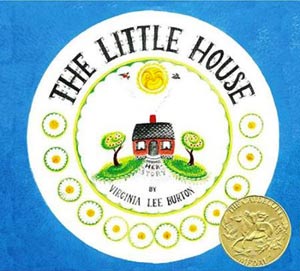 The Little House by Virginia Lee Burton was first published in 1942 but remains a favorite of many. It tells the story of a Little House — from the house’s perspective — that is located in the country, is lived in, and surrounded by beauty.
As the Little House sees the distant lights of the city, she wonders what it would be like to live in the city, and as time goes on, she finds the city growing until she is surrounded by it and no one lives in her anymore...